How to Choose Non-Toxic Cleaning Products That Actually Work
Walk down any cleaning aisle and it feels like every bottle says natural or eco, yet the ingredient list can be vague, the scent can be overpowering, and you still have no clue what is actually safer for your home. We get it. We talk to shoppers every week who want nontoxic cleaning products, but also want them to work.
In this guide, we will show you a simple way to choose cleaners that feel better to use and make more sense on the label. You will learn what “nontoxic” usually means, how to spot greenwashing fast, and how to do a quick label check that helps you pick the right cleaner for the job.
The top questions we hear are: “Do you have fragrance-free options that do not trigger headaches?”, “What is safer around kids and pets?”, and “What should I use if my skin reacts easily?”
What “nontoxic” actually means (and what it does not)
“Nontoxic” sounds clear, but on many natural cleaning products online, it functions more like a vibe than a standard. There is no single universal rule that forces every brand to use that word the same way. So we treat it like a starting point, not proof.
When we shop for “nontoxic,” we look for proof signals:
- Transparency: an active ingredient list, not a mystery “blend”
- Standards or verification: credible certification where possible
- Task-fit: the right formula for the mess, so you do not overuse product
One simple distinction helps a lot. Cleaning vs disinfecting. Most day-to-day mess is basic cleaning. Think crumbs, grease splatter, bathroom soap scum, laundry smells. You usually do not need hospital-grade disinfectant for that.
Here is our honest take. Strong disinfectants can be useful during illness periods, or when you truly need to reduce germs on high-touch areas. But they often come with downsides: stronger smell, more surface irritation, and higher exposure risk if used every day. Research on disinfectant exposure in work settings also links certain disinfectant chemicals with respiratory outcomes, which is one reason we prefer selective use rather than daily use.
So our rule is simple: use disinfectants like a tool, not a lifestyle. For everyday cleaning, choose products you can use regularly without dreading the scent or needing extreme precautions.
Read Also: How to Use Oxygen Soaker with Eco Laundry Detergent
The 5-Step Checklist to Choose Non Toxic Natural Cleaning Products
When you want nontoxic cleaning products, the fastest win is a repeatable routine that keeps you out of decision fatigue. This checklist is the shortcut you can use to filter options quickly, spot greenwashing, and match the product to the job.
Step 1. Choose the right product type for the job
Start with the mess, not the marketing.
- Kitchen degrease: stovetops, rangehood areas, oily fingerprints
- Bathroom soap scum: shower glass, tiles, bath edges
- Odors: bins, pet areas, damp cloth smells
- Laundry stains: sweat, food, mud, set-in marks
- Produce wash: fruit and veg when you want an extra wash step
We see people buy a “gentle all-purpose” cleaner for everything, then get frustrated when it does not cut grease or stains. The next step is usually overuse: more sprays, more scrubbing, more product, more scent in the air.
A better move is to use gentle for daily wipe-downs, and keep one or two task-specific helpers for grease, soap scum, or stains. That is often the difference between “eco cleaning feels weak” and “this actually works.”
Step 2. Look for natural ingredient transparency
If the label feels like it is hiding the ball, it usually is.
Red flags we watch for:
- “Fragrance” or “parfum” with no detail
- “Proprietary blend” for key ingredients
- No ingredient disclosure at all
Fragrance is a big one. Not because fragrance is always “bad,” but because it is often the number one reason shoppers quit eco cleaners. We hear it all the time: headaches, nausea, and “my whole house smells like cleaner for hours.”
Good sign: a full ingredient list and an easy-to-find Safety Data Sheet (SDS). SDS documents are designed to communicate hazards, handling, and safety information for cleaning chemicals.
Step 3. Use third-party trust markers
Certifications beat vague claims because they force definitions. A label that says “eco-friendly” can mean anything. A credible program has criteria, documentation, and a process.
Two examples you may see:
- EPA Safer Choice (US): products carrying this label have their ingredients reviewed against EPA’s safer-chemicals criteria, with a focus on both human health and environmental characteristics.
- GECA (Australia): a well-known Australian certification body that positions its standards as a way to cut through greenwash and provide credible validation.
Australia’s regulator has been very direct that environmental claims must be truthful, accurate, and not misleading by what you say or leave out. If a brand uses green imagery and broad claims without evidence, that can mislead shoppers.
Step 4. Watch the “big 3” exposure triggers
We keep this practical. No fear. These are simply the three patterns that most often cause regret.
1) Fragrance-heavy formulas
This is the #1 reason we see people abandon “eco” cleaning. Scent can linger, trigger headaches, or feel irritating, especially in small rooms with poor airflow. Community discussions are full of people saying scent-free cleaning is frustrating to maintain, which matches what we hear in store questions.
2) High-VOC products
A strong odor often signals a heavier VOC load, and studies show cleaning products can emit VOCs, including cases where “green” products still emit VOCs, just sometimes at lower levels. Fragrance-free options can reduce VOC exposure in testing.
3) Quats in disinfectants
Quaternary ammonium compounds (“quats”) are common disinfectant actives. Evidence in occupational settings links disinfectant exposures and quats with asthma-related outcomes, so we treat them as use-case tools rather than everyday cleaners.
Step 5. Check the SDS when you can
An SDS is the fastest reality check when you are unsure. It typically includes hazard identification, handling and storage guidance, first-aid or emergency information, and recommended protective measures.
If a product needs strict ventilation and gloves for normal use, it is not a casual everyday cleaner.
That does not mean it is “evil.” It means it belongs in the “use occasionally, with intention” bucket. Safe Work Australia explains SDS as key safety information for hazardous chemicals and why they matter.
Read Also: How to Remove Sweat Smell From Clothes
Common “clean” marketing claims that mislead shoppers
| Claim |
What it can hide |
What to look for instead |
| “Natural” |
No defined meaning |
Full ingredient list + credible certification |
| “Eco-friendly” |
Could only refer to packaging |
Verified standard, clearer scope, real evidence |
| “Non-toxic” |
Vague promise |
Ingredients + SDS + credible trust markers |
| “Essential oil scented” |
Can still irritate sensitive users |
Fragrance-free option for sensitive homes |
| “Plant-based” |
Not automatically low-VOC |
Fragrance-free, transparent ingredients, VOC awareness |
We love simple solutions like vinegar or baking soda for the right job, and plenty of people use them. But online communities also point out that mixing vinegar and baking soda together often cancels out the benefits, and many scent-sensitive people still find “scent-free cleaning” harder than it should be. That is why we prefer scenario-based choices: pick what fits your home, your nose, your skin, and the mess you actually fight.
How to Choose Non-Toxic Cleaning Products Based on Your Needs
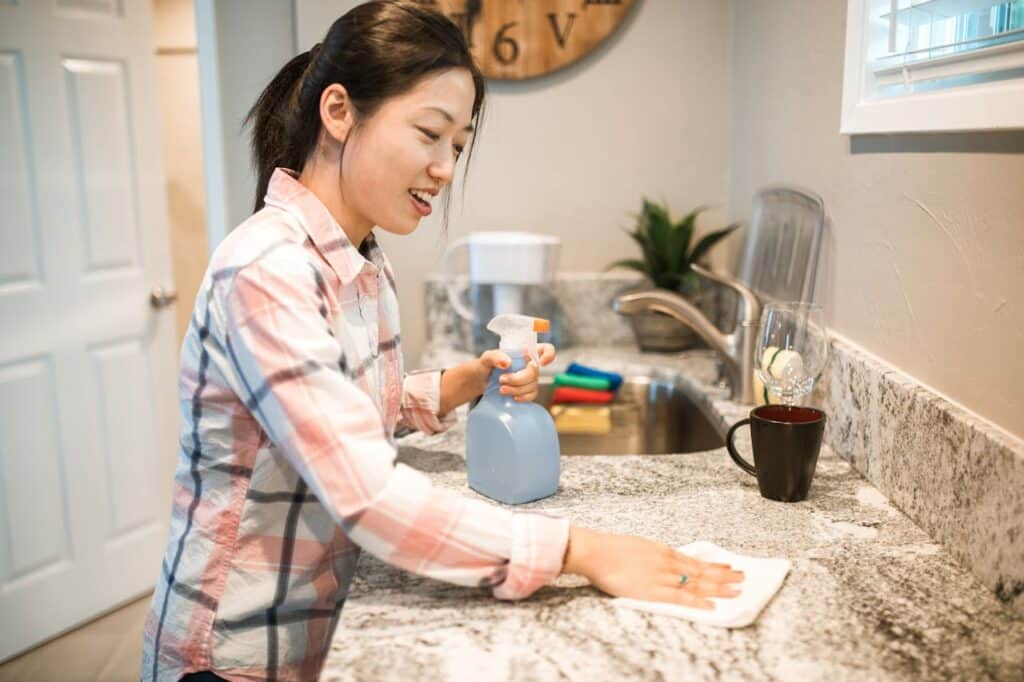
If your home has sensitivities (skin, scent, airways)
If you or someone in your home gets headaches, itchy skin, watery eyes, or that “tight chest” feeling after cleaning, keep your choices boring and predictable.
Here is what we prioritize first:
- Fragrance-free or very lightly scented formulas
- Clear ingredient disclosure (no mystery blends)
- No routine disinfecting for everyday mess
- Simple, rinsable products that do not leave a strong film behind
If you only change one thing, change fragrance. In our experience, fragrance is the fastest way to turn “cleaning day” into “why do I feel awful?”
Shop eco-friendly laundry and kitchen cleaners.
If you need high performance on grease and grime
Some homes need more muscle. Busy kitchens, shared bathrooms, cloth nappies, sport uniforms, hard water build-up. If you are fighting real grime, do not force a mild all-purpose cleaner to do a heavy-duty job. It makes you scrub longer and use more product.
Instead, choose task-fit formulas:
- For dishes and build-up: dishwasher powder
- For bathrooms: a heavy-duty bathroom cleaner that handles soap scum
- For laundry stains and dingy whites: an oxygen soaker
- For everyday loads: reliable laundry liquids that you can dose correctly
A quick practical tip we often share is that if you keep re-cleaning the same greasy area, that is not “you doing it wrong.” That is usually the wrong product type.
If you use greywater or care about waterways
If greywater matters in your household, keep the approach simple and consistent.
Here is what we recommend:
- Use disinfectants only when you truly need them
- Prefer products you can measure accurately rather than “spray until it feels clean.”
- Choose concentrated formulas when possible, so you transport and store less water
- Avoid overuse. More product does not equal more clean. It often means more residue.
If you want a quick place to start, browse eco-friendly cleaning products and build your kit.
People usually start with laundry, because it is the most personal. They want fewer skin reactions, less lingering scent, and clothes that still feel properly clean. Then, about a week later, they come back looking for either dishwasher powder or a produce wash because those are the next two areas where “what is on the label” starts to matter in daily life.
That is also why we suggest building your kit in that order. Laundry first, then kitchen.
Read Also: How Cleaning Products Affect Indoor Air Quality
FAQs
What does “non-toxic” mean on cleaning products?
“Non-toxic” often works as a marketing claim, not a strict standard. We treat it as a starting point, then look for proof signals like full ingredient transparency, an accessible SDS, and credible certification where possible. We also check task-fit, because using the wrong product usually leads to overuse and more exposure.
Are “plant-based” cleaners always safer?
Not always. “Plant-based” refers to the source of some ingredients, but a product can still include strong fragrance, solvents, or irritants. If your goal is a gentler home routine, look for transparent ingredients, fragrance-free or lightly scented options, and a product designed for the mess you have so you do not need to over-apply.
What certifications matter in Australia?
Look for credible third-party markers that define criteria and reduce greenwashing risk. In Australia, GECA is a common certification used across product categories. You may also see international labels like EPA Safer Choice on some products. Certifications are not perfect, but they are usually more meaningful than vague claims like “eco” or “natural.”
Are scented products a problem if they are “natural”?
They can be. Essential oils and “natural fragrance” still contain compounds that can irritate sensitive skin or airways, and scent can trigger headaches for some people. If your home has sensitivities, start fragrance-free or very lightly scented, then add scent later only if it feels fine in real life.
Do “green” cleaners release VOCs?
Yes, some do. “Green” does not automatically mean low-VOC, and even products marketed as eco-friendly can emit VOCs, especially when heavily fragranced. If VOC exposure is a concern, fragrance-free products and good ventilation are a practical first step, plus measured dosing so you do not flood the room with product.
When do I actually need disinfectant?
Use disinfectant when there is a clear reason, like illness in the home, high-risk contamination, or specific hygiene needs. For everyday mess, cleaning is usually enough. We treat disinfectant as a targeted tool, not an everyday habit, because routine use can increase irritation, smell, and exposure without giving you meaningful extra benefit.
Conclusion
Choosing nontoxic cleaning products gets easier once you stop chasing buzzwords and start using a repeatable label check. Focus on ingredient transparency, credible trust markers, and the right product for the job. If you build a small kit that matches your home, you get better results with less scent, less residue, and far less frustration.
 Free Shipping* on all orders over $99





Leave a Reply
Your email address will not be published. Required fields are marked *